
Workshops in “Het Koetshuis”
Our platinum and gold sponsors are hosting hands-on workshops throughout the day in het koetshuis, bringing real-world expertise to Product Content Europe.
Join them to explore solutions, ask questions, and connect with practitioners working on the challenges that matter most to your content strategy.
Sign-up with the event check-in and registration on the 6th of October or email us at info@productcontenteurope.com to secure a seat!
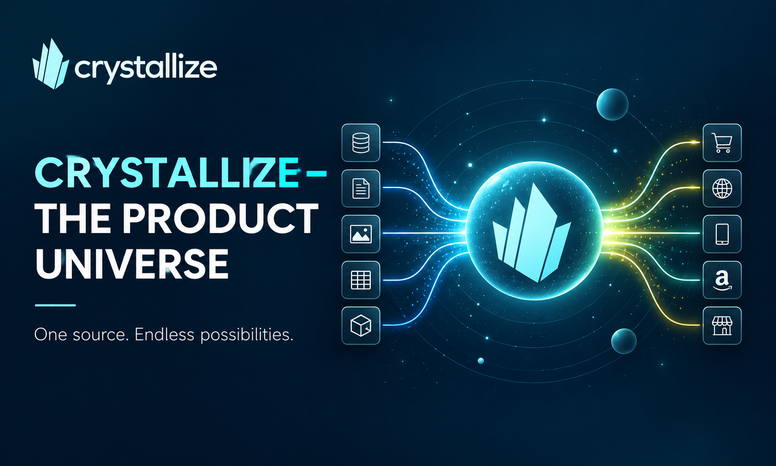
CRYSTALLIZE – THE PRODUCT UNIVERSE
Perfect product data sits still until something sells with it. This workshop covers the layer after PIM: the commerce engine that turns a clean catalogue into a channel that takes orders, prices per customer, and answers questions from AI agents.
Crystallize combines PIM, DAM, content and commerce in one system with a GraphQL API. In this session you will use it to stand up a working storefront from an existing catalogue, in the room, in under 45 minutes. Pick your scenario at the start: a private B2B channel for one named customer with its own price list and assortment, or a small store for a new country with its own currency, tax rules and language. You will model the catalogue subset, apply the pricing and access rules, connect a front-end starter, and publish. The session closes by pointing an AI agent at what you built to confirm the catalogue is machine-readable without plugins or scraping.
EMMET SOFTWARE LABS | Q-MUTATOR
Every catalogue has them: the records with a blank material field, a 900-word description scraped from a supplier PDF, one usable image, and no chance of surviving a marketplace validation. This workshop takes those records and rebuilds them in front of you.
Emmet Software Labs, a German PIM, DAM and MDM implementation partner, will use QMutator, their AI-native product data and media pipeline, to run a live pipeline on product records supplied by the room. You will see a raw record ingested, validated, AI-enriched, converted into channel-specific image variants, and published as a feed for Google Shopping, Meta and TikTok. The final step tests whether the result is actually machine-readable by querying the catalogue in plain language, the way an AI shopping assistant would.